
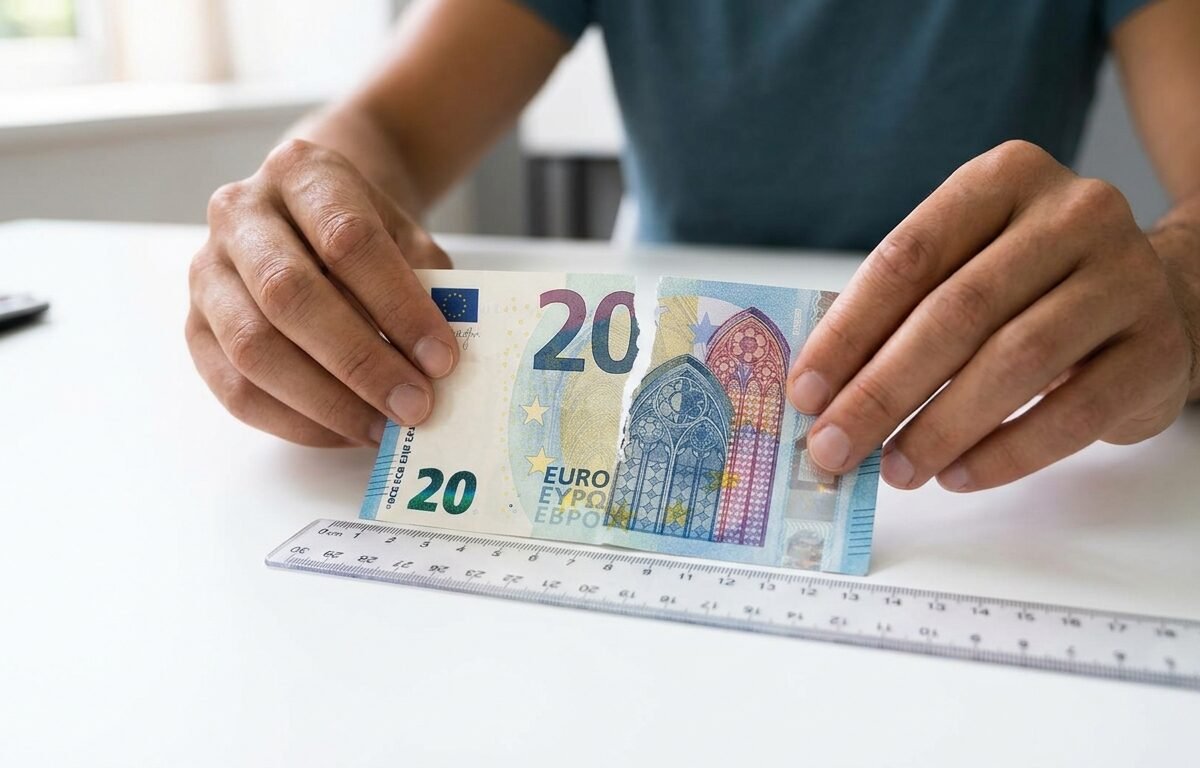
Keep all the pieces of damaged euro notes you want to exchange in Germany, including scraps that show only a little colour. The Deutsche Bundesbank can replace eligible genuine banknotes. A clear account of what happened matters, particularly if the washing machine, a shredder or a fire left you with no more than half a note.
Quick answer. The Bundesbank generally replaces a genuine note if more than half survives, or if you can prove the missing portion was destroyed. Gather the material, complete reimbursement form 3150 and choose a hand-in or delivery route. Ordinary replacement is generally free. Bundesbank guidance and current application form.
📑 Table of contents
Which damaged euro notes qualify?
Think of the rule per banknote. A complete €50 note torn into three pieces can still represent one €50 note. Two unrelated half notes do not make up a claim for one complete note simply because the pieces add to the area of a banknote. Give the examiner what you have and explain their origin.
Exactly half is an important boundary. The straightforward route requires more than half. With half or less, you need evidence that the missing remainder was destroyed. Saying you cannot locate the other piece describes a loss. It does not, by itself, show destruction. Describe what you actually saw and leave uncertain details marked as such.
Deliberate damage and notes already devalued by a Bundesbank branch fall outside the normal replacement rules. Accidental damage while doing laundry or emptying a shredder is a different situation. If the cash belongs to someone else or you simply found it, establish the proper route for the owner before presenting it as your money.
Collect fragments without making the damage worse
- Contain loose pieces. Place the material in a secure enclosure that will keep small shreds from escaping. Preserve a bundle that is stuck together if pulling it apart risks losing more detail. You do not need to turn the remains into a recognisable jigsaw before seeking help.
- Protect brittle remains. The Bundesbank asks for even ashes. Keep hard items such as coins away from fragile material during transport. If several packets were found in separate places, label their outer packaging so the examiner can tell which pieces came from which location.
- Record the circumstances. Write down when the damage happened, what caused it, the denominations you believe were involved and what became of missing pieces. If you know only the approximate total, say how you estimated it. Distinguish a withdrawal receipt from proof that every note was in the damaged bundle.
- Identify hazards early. If chemicals or other hazardous substances treated the damaged euro notes, the Bundesbank requires a written declaration identifying them. Ask for handling instructions before moving suspect material and include the relevant safety data information where available.
Imagine finding a €20 note in a wet trouser pocket. The large piece and several small strips are still there, but one corner disappeared. Instead of trying to fill the gap with scraps from another note, keep this set together and explain that it went through a wash. The bank can then assess that particular note.
Choose where to submit the application
| Route | What to check before setting out |
|---|---|
| Bundesbank branch | Public counter opening times and whether your visit needs arranging |
| Your own bank | Whether it will forward the submission and how you can track it |
| Direct shipment to Mainz | Current address, carrier’s cash rules, packaging and cover for loss |
Download the current form from the Bundesbank’s damaged-money page. Use the contact and payment details requested on it, describe the damage and check the signature fields. At a Bundesbank counter, present the complete form with the damaged euro notes. Keep the final page the branch gives back as your receipt.
If you post the material, copy the destination from the official instructions. The Bundesbank does not cover cash lost on its way there. Tracking can prove that a parcel moved through a network while the carrier’s conditions still exclude cash from compensation. Confirm the terms for this specific shipment and its value.
For a small amount, weigh the trip or postage against the face value before setting out. A local bank willing to forward damaged euro notes may save travel time. Ask what acknowledgement it gives you and which date counts as receipt by the Bundesbank if specialist examination is necessary.
Common mistakes with damaged euro notes
Throwing away the wrapper too soon. If a pocket, envelope or storage box still contains tiny pieces, collect them before discarding it. A clean envelope with only the biggest fragment can leave the examiner less to assess than the material originally available.
Trying to wash out suspicious dye. Cash stained by anti-theft equipment follows special rules. If someone offers you a conspicuously ink-stained note, decline it. If you already received one, take it to your bank and explain where it came from. Reimbursement can depend on who owned it when the staining occurred. ECB guide to damaged and ink-stained banknotes.
Budgeting for an instant payout. Some damaged euro notes need specialist examination. The Bundesbank says a decision ordinarily takes up to three months from lodgement at a branch when direct exchange is unavailable. Especially difficult cases can take longer. Keep your receipt if you need to ask for progress.
Pro tips for following a claim
Make a short inventory to keep at home. For example, “one €50 in three pieces, one €10 almost complete” is more useful than “€60 sent”. A photograph of the material and copies of the signed form and receipt can help you answer questions later without trying to reconstruct the bundle from memory.
Read the payment section carefully. You can give an IBAN for an approved reimbursement or select cash collection at a Bundesbank branch as directed on the form. The Bundesbank does not mail cash back. For a foreign transfer, check potential costs before choosing how to receive a relatively small amount.
FAQ
Can I submit damaged euro notes that went through a shredder?
Yes, you can submit the recovered pieces for assessment. Preserve as much material as possible, explain how the notes got into the shredder and identify the amounts only as confidently as the evidence allows. The Bundesbank still has to establish authenticity and whether the replacement conditions are met.
Will an ordinary German bank exchange my note immediately?
Ask your bank whether it will handle the case or forward the material to the Bundesbank. Describe the damage before visiting, especially if the notes are fragile or contaminated. The Bundesbank route remains available when a local bank cannot help, and specialist examination may take time.
What happens if I find another piece after a refusal?
Keep the decision letter, any returned fragments and the newly found piece. The Bundesbank says you can submit additional fragments for re-examination. Refer to the earlier claim and explain where the extra material turned up so the examiner can connect it to the correct banknote.
Do I need the serial number for every torn note?
Record a serial number if it is clearly visible, but preserve pieces that have no legible number too. The bank examines the material supplied and the circumstances of the damage. If the denomination or count is uncertain, explain your estimate on the form rather than inventing missing details.
Hand over the evidence once
Before submitting damaged euro notes, count your labelled packets, check your payment details and save the receipt or dispatch record. Those three checks give the examiner intact material, a way to reimburse an eligible claim and a reference you can use if a question arises.
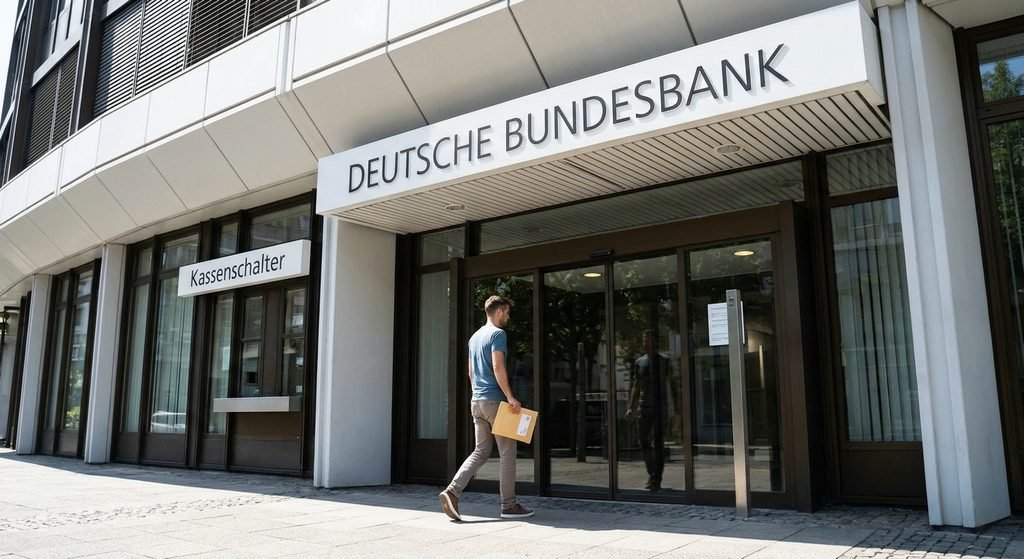
Submission Address:
Deutsche Bundesbank National Analysis Centre for damaged money Hegelstraße 65 55122 Mainz

